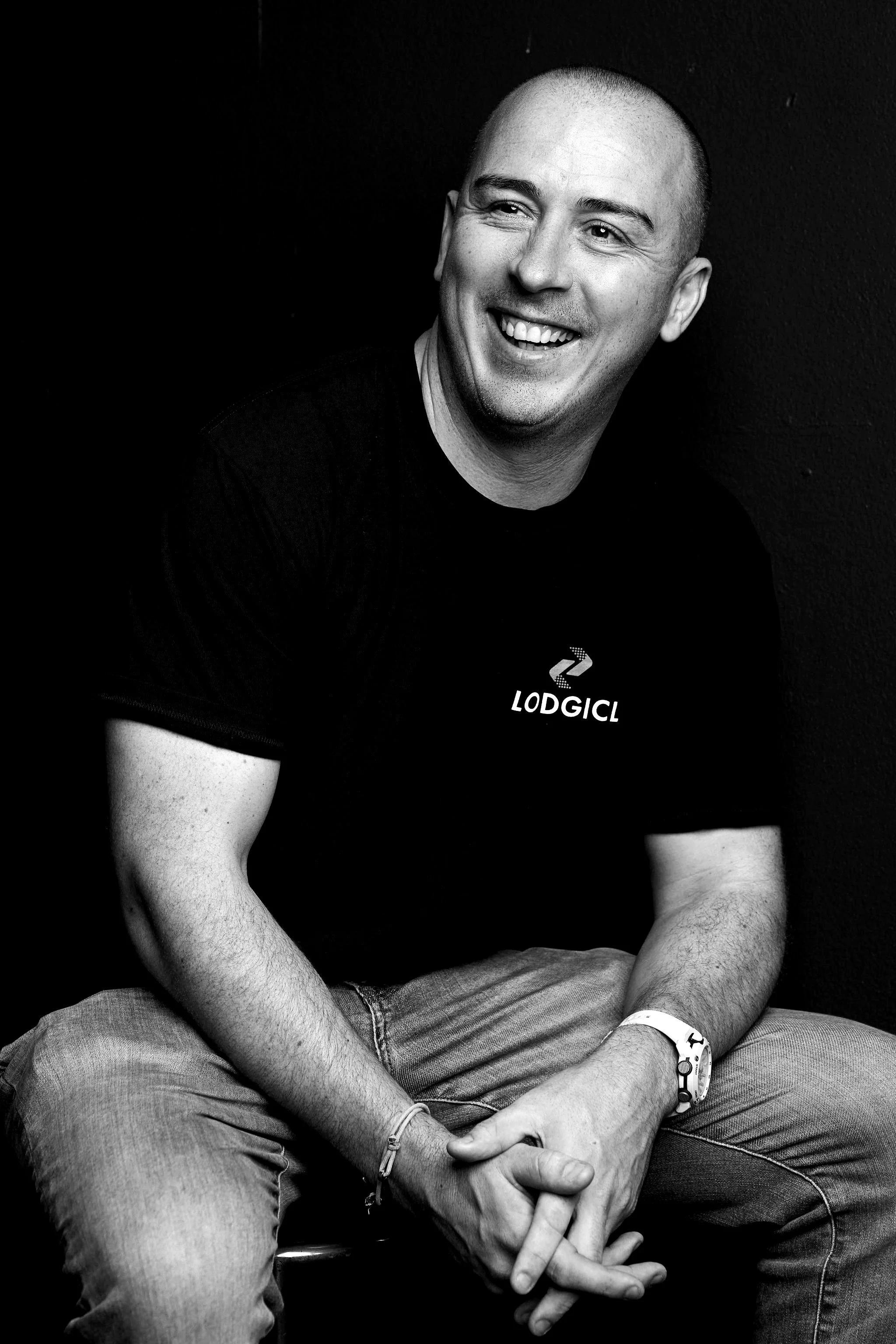
Ian Tulloch | Insurtech | Lodgicl
Growing up as the child of two British Army parents, Ian spent his early years moving between Cyprus and Germany before settling in the UK at age seven. His childhood unfolded in rural Bedfordshire - a place where “bustling metropolis” was more aspiration than reality. Entrepreneurship wasn’t part of the family vocabulary; instead, Ian watched their mother navigate week-to-week challenges, instilling a drive to seek out opportunities and build a life with more options and less financial pressure.
After leaving the corporate world, Ian founded an insurance services firm focused on assessments, quickly discovering that the real friction in home claims wasn’t just inefficiency, but a lack of structured, connected data across the supply chain. Despite everyone’s best efforts, no one had the full picture.
This insight became the seed for Lodgicl. The idea took shape during their time in Antler’s 12th cohort, where Ian met co-founder Keith. Backed by Antler’s initial investment and ongoing support, they set out to solve the data disconnect at the heart of the industry. Lodgicl is the result - a company born from hard-earned lessons and a relentless pursuit of better ways to connect the dots.
The home insurance space remains “messy” and it hasn’t really been nailed. I was lucky enough to have had a few chats with Ian and he has shared some of his insights, learnings and a bit more about Lodgicl below.
Any key stats, data, reports, or research to give flavour to the opportunity/problem?
The numbers in insurance are always significant. For context, over $340 billion is spent on property claims globally each year. Closer to home in Australia, industry bodies have highlighted the challenge: there are around one million home claims per year, but the system struggles under the pressure of major events. There has been a fivefold increase in AFCA complaints over the last five years, with nearly half overturned in the policyholder’s favour.
To me, that shows the assessing bottleneck isn’t just slow - it’s costing trust. We need both speed and quality if we want to turn those numbers around.
What does Lodgicl do? Who is the solution for? What problem does it solve?
Our vision for Lodgicl is a claims execution platform for the entire insurance supply chain, but we’re starting with smarter, faster home assessments. We give repairers and insurers the tools to assess damage, link it to policy, and generate structured reports in real time. This halves assessment time and provides everyone in the chain - assessors, insurers, and customers - with clearer answers, faster.
What is your elevator pitch?
Lodgicl connects insurers and their suppliers through structured data and intelligent workflows, starting with assessments and building towards a unified claims execution layer.
What is unique about Lodgicl?
We’ve built real-world policy logic into a structured, mobile-first workflow - something that’s usually stuck in PDF documents and human memory. Our platform doesn’t just digitise forms; it executes decisions.
What have you learnt about raising capital?
That it’s about fit, not just funding. Some of our most promising conversations have been with people who aren’t the right fit yet, but might be later.
Practically, start planning earlier than you think, communicate clearly, and never underestimate how long due diligence takes!
What can corporates learn from early-stage businesses?
Learnings go both ways, but I wish I’d had more speed and clarity back then. Startups can’t afford to overcomplicate. We need to test ideas quickly, get feedback faster, and cut through the noise to keep moving.
Where do corporates need to improve in working with/supporting early-stage businesses?
Make it easier to pilot.
In insurance, security and compliance rightly matter - we’re working through ISO27001, SOC2, and ISO42001 now. Many corporates could go further by helping startups stand up compliant proofs of concept. There’s so much potential to partner earlier and unlock value together.
Looking back, with what you know now, what would you have done differently?
It’s a long list! What comes to mind first is that I’d have worked harder on communicating complexity simply. When you’re close to a problem, it’s easy to get lost in the weeds, but whether it’s investors, customers, or your own team, clarity always wins. Strip out the fluff, stay on narrative, and don’t get distracted by the rabbit holes.
Where do you see Lodgicl in ten years’ time?
I’d love to see a meaningful execution of the vision we’ve set: the operating system for claims execution. From the moment a claim is lodged to the moment it’s closed, supply chain partners and insurers all working from the same structured, connected, and intelligent workflows.
Biggest challenge you have faced so far?
Balancing speed with compliance, for sure. Building fast is hard. Building fast while preparing for ISO27001 and SOC2, and keeping customers engaged with what’s coming, is a whole other game!
Example of a good result with Lodgicl?
We’ve had some really good traction early on, with four repairers piloting with us, representing over 40,000 assessments a year. For me, though, real success will be when assessors say: “I can’t imagine going back to the old way.” Everything flows from that user experience.
What are the key disruptive forces you see facing the insurance industry?
Modular, personalised policies bring a new level of complexity to the supply chain, which is something we believe we can help with.
The retiring workforce in insurance (30% by 2030) means the race is on to make gains and reduce effort in claims management, or we’ll face an even bigger challenge.
And of course, AI - beyond the usual superlatives about its transformational potential, it needs a bedrock of good data to deliver on that promise. All of these point to one thing: we need better, structured execution at scale.
What is your focus now, and for the next couple of years?
Execution, first and foremost. Proving the assessing wedge works, then expanding across the claims lifecycle, one workflow at a time, until we reach a truly unified supply chain.
What are the one or two lessons or principles you carry with you into everything you do?
First, my job as a leader is to create an environment in which everyone does their best work. If everything I do meets that goal, then I feel I’m on the right track and leading by example.
Secondly, sometimes the best thing I can do for an outcome is to get out of the way. It’s much easier in a large corporate with bigger teams, much harder in a startup where everyone wears multiple hats. But my experience in large business helps shape how to run a small, but growing, one.
Where do you see yourself in ten years’ time?
Hopefully doing something that feels just as meaningful! That could mean continuing to realise the Lodgicl vision or moving on to the next chapter. Whatever it is, I need to be learning - I’m far too restless to stay still for long, as my failed attempts at resort-style holidays have proven!
How do you balance your personal time and your work time?
I don’t always get it right, but I try to be fully present wherever I am. I’ve got two boys, aged 7 and 10, and thankfully we all share a passion for the finer things in life: building Lego Star Wars sets, playing football, and Mario Party on the Nintendo Switch, which makes switching off just a bit easier.