Angelo Azar | Honey Insurance | Insurtech
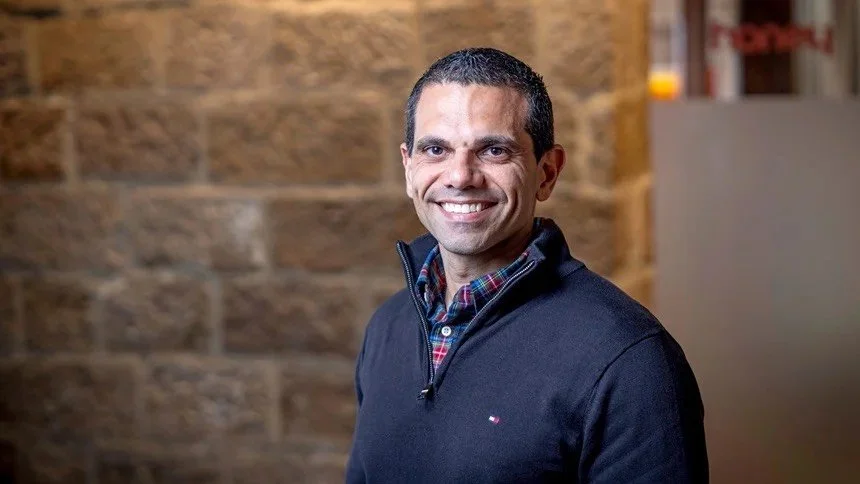
Growing up, Angelo called just about every corner of Sydney home. His family moved often, but one thing never changed: his loyalty to the Canterbury Bulldogs. Those early years, spent adapting to new neighbourhoods and forging fresh connections, taught him the value of resilience and relationship-building - skills that have become his compass for navigating change and leading teams through uncertainty.
That same spirit of adaptability is what drew him to Honey Insurance. The company’s story began when Richard Joffe, the founder, landed in Australia and was struck by how outdated home insurance felt. He saw a sector ripe for reinvention. When the opportunity arose to join Honey’s leadership team, Angelo jumped at it. My background in operational transformation across insurance and financial services, with a focus on customer-centric design and technology integration, felt like the perfect match for Honey’s mission.
I have known Angelo for a long time, so it is great to be able to share his story and some his perspectives on home insurance and insights from his time at Honey.
What is Honey’s vision?
From day one, our vision was clear: fundamentally reimagining how insurance serves Australians. We launched in 2021, blending our complementary strengths to create a proactive, digital-first model - one that puts customers at the centre and aims to set a new standard for the industry. For me, it’s not just about insurance; it’s about building something that truly changes the game.
Any key stats, data, reports, research you can provide to give flavour to the opportunity/problem?
The statistics demonstrate the massive opportunity for disruption in Australian insurance. Underinsurance affects about four out of five Australians. When we launched, research showed 183,000 home claims being declined or withdrawn annually, with average claim sizes increasing 16% year-over-year to $8,400. This left customers paying a total of $1.5 billion out of pocket each year - a problem we're directly addressing.
Our research revealed that nearly 50% of insurance claims are completely avoidable with the right prevention. This insight drove our product development strategy, fundamentally shifting from reactive claims processing to proactive risk mitigation.
Most customers view insurance as a grudge purchase. We're changing that perception by creating value beyond the policy itself, with technology that actively protects homes from day one.
What does Honey Insurance do? Who is the solution for? What problem does it solve?
At Honey, our team has built an insurance model combining operational excellence and innovative technology. Our collaborative approach focuses on creating systems that detect problems before they cause damage, which reflects our commitment to driving productivity improvements and enhancing customer experience.
We've observed that treating customers as individuals and using technology to simplify complex processes yields the best results – principles we've embedded into Honey's operational DNA.
The problem we're solving is making insurance actually work for people - not just financially when things go wrong, but as an ongoing service that delivers value and builds meaningful customer relationships every day. This shift from transactional to relationship-based insurance represents the future of the industry.
What is your elevator pitch?
Honey is with you from before day 1, using technology to make everything smoother, simpler, clearer and proactively protect you.
Our leadership team is putting customers at the centre of everything we do, using technology not just for efficiency but to create real value in customers' lives every day.
Together, we're turning insurance from a dreaded necessity into a service that people appreciate, leveraging diverse perspectives from insurance, banking, manufacturing, and engineering sectors.
What is unique about Honey Insurance?
What's unique is our proactive approach rather than the reactive model that dominates the industry. Experience has shown that prevention is vastly undervalued in insurance, so we've built systems that help detect risks early.
We've created an operation that prioritises customer experience over traditional insurance processes. This approach builds on proven methodologies for driving productivity improvements and transforming customer service operations, which have consistently delivered high NPS scores.
Most importantly, we've assembled a team with a vision for transformation. My leadership philosophy focuses on empowering teams to think differently while maintaining operational excellence – resulting in both innovation and consistent execution.
What have you learnt about raising capital?
Capital raising is an endurance sport, not a sprint.
Investors invest in execution capability, not just ideas. They want to see the team, drive, and discipline to turn vision into reality. That's why we've focused on building a team of excellence - people focused on working together to build things that are different.
Transparency builds more investor trust than presenting a perfect façade. It's about demonstrating you can navigate the inevitable obstacles when building something revolutionary. When we've been honest about challenges, we've found investors more willing to provide not just capital but strategic support.
What do you think corporates can learn from early stage businesses?
Corporates need the agility and customer obsession of startups. In startups, there's an urgency and focus on execution that gets lost in larger organisations where committees and bureaucracy slow decisions.
If corporates want startup thinking, they can't fit that startup into a legacy model. From ideation to P&L allocation, it simply doesn't work. You can't apply the same metrics, timeframes, and processes to an emerging business that you use for established ones.
Experienced corporate leaders can make fantastic mentors for startups, providing invaluable guidance while allowing fresh thinking to flourish. Innovation thrives when you combine seasoned wisdom with people who think differently and aren't constrained by tradition. Have natives work on solutions that today's generation demands.
Startups excel at rapid testing and learning. They try something, measure results quickly, and pivot if needed. Corporates often get caught in analysis paralysis, where perfect becomes the enemy of good enough.
Where do corporates need to improve in working with/supporting early-stage businesses?
Corporates need separate frameworks for evaluating startups that don't subject them to the same metrics as mature business units. Innovation requires different KPIs and longer runways.
They need true partnerships rather than control. Often corporates dictate terms that stifle the very innovation they're trying to access. Successful relationships recognise each other's strengths and collaborate.
Decision-making speed is critical. Promising partnerships fizzle because corporate partners move too slowly. By the time approval comes, the opportunity has changed or the startup's moved on.
Finally, corporates must be willing to learn and adapt, not just expect startups to fit their models. Value flows both ways – startups get resources and scale, while corporates get fresh thinking and innovation – but only if corporates are genuinely open to change.
Looking back, with what you know now, what would you have done differently?
I would have been less patient (right word believe me) at the beginning and grabbed the bull by the horns earlier. It's unbelievable how fast time moves in a startup, and I've learned to cut through the noise and focus only on things that truly matter. When you have conviction about a direction, move decisively.
Don't spend time talking and focusing on rubbish that realistically doesn't move the dial and just burns resource, effort and money.
That said, I'm proud of our cross-functional execution and the team we've built – leaders at every level who think win-win and truly want to make a difference.
Where do see your Honey Insurance in ten years time?
In ten years, the transformation we've initiated will fundamentally change how Australians think about insurance – from grudge purchase to valued service that actively protects homes.
The customer-centric approach we've championed will expand beyond just home insurance to a broader ecosystem of protection services. The AI implementations we've pioneered will drive even more personalised coverage with predictive capabilities.
Most importantly, the industry disruption we've catalysed will have inspired positive change across the entire insurance landscape, pushing other providers to become more innovative and customer-focused – ultimately benefiting all insurance consumers.
Biggest challenge you have faced so far?
The biggest challenge is balancing innovation with being risk-aware in an industry that moves cautiously. We're very clear about maintaining the highest standards while moving at pace – it's about being risk-aware at every step rather than risk-averse.
Educating customers about a new approach to insurance is another challenge. Most people have low expectations based on past experiences, so we're not just selling a policy; we're introducing a new concept. This requires thoughtful marketing and educational content.
What sets us apart is resilience. When things get difficult – that's where I love to live. Most people pass when it's too hard, but that's exactly where difference is made. Challenges aren't obstacles; they're opportunities to demonstrate our commitment to reimagining insurance.
Example of a good result with Honey Insurance?
Our proudest achievement is building a team that consistently delivers an NPS of 90+ whilst executing at pace. This exceptional score reflects the customer-first culture we've cultivated together through systematic feedback loops and empowerment.
We've championed cross-functional execution with leaders at every level who think win-win and truly want to make a difference. This collaborative approach has allowed us to move quickly while maintaining quality in everything we do.
The AI implementation we've developed has been transformative for our business operations. While many insurance companies lag behind in technology adoption, we're showing what's possible when you combine operational expertise with genuine innovation.
What are the key disruptive forces you see facing the insurance industry?
AI and data analytics are transforming risk assessment, claims processing, and customer engagement. These technologies provide more accurate risk profiles and automate routine tasks, allowing focus on complex customer needs.
Embedded insurance is disrupting traditional distribution, integrating coverage directly into the customer journey at the point of need – whether buying a home, a car, or booking travel. This requires rethinking customer acquisition and business partnerships.
The shift from reactive to predictive insurance represents a fundamental change in value delivery. IoT sensors, wearables, and real-time monitoring enable prevention rather than just compensation after loss.
The insurance industry is significantly lagging in modernising digital experiences. Today's consumers expect seamless, intuitive interactions like they get from tech companies. Insurers clinging to outdated processes will struggle to survive as customer expectations evolve.
What is your focus now? And for the next couple of years?
My focus now is scaling the systems we've built while maintaining our exceptional customer experience. I'm ensuring our processes and people can support growth without losing the personal touch that sets us apart.
I'm concentrating on three areas: First, advancing our AI capabilities to drive more personalised experiences and improve overall individual and organisational effectiveness. This will allow us to better understand and serve our customers.
Second, expanding our partnership ecosystem. We've developed successful distribution relationships and see significant opportunity to create more win-win partnerships that extend our reach.
Third, developing our talent pipeline and culture. My leadership philosophy centres on creating environments where people can grow while delivering outstanding results.
What are the one or two lessons/principles you carry with you into everything you do?
Listen first, understand deeply, then take time to contribute thoughtfully. Too often, people rush to speak without truly comprehending others' perspectives. By listening actively and seeking to understand before being understood, I build stronger relationships and make better decisions.
Think win-win in every interaction. I'm amazed how many try to win through manipulation or deception – that always backfires. Long-term success comes from creating value for all parties, not short-term gains at others' expense.
Execution remains the key to winning. Ideas are a dime a dozen. I openly share ideas because I've seen firsthand that execution is where the game is won – out on the court, not in the locker room. Success isn't about the best idea, but who implements most effectively.
Where do you see yourself in 10 years time?
In 10 years, I see myself continuing to lead organisations that transform industries by putting customers at the centre. I'll be applying the operational excellence and customer experience expertise I've developed throughout my career to solve increasingly complex challenges at scale.
Having led teams across multiple industries, I hope to have further reshaped how businesses operate, making them more customer-focused and technology-enabled. I aspire to mentor the next generation of leaders, sharing insights I've gained from education and practical experience guiding operational transformations.
On a personal level, I'll still wake up at 4:30 every morning to train and still prioritise family above all else. These core values won't change, regardless of my professional journey. What excites me most is applying the lessons I've learned from driving operational transformations to solve complex problems that affect many people.
How do you balance your personal time and your 'work' time?
Discipline and routine are my foundations. I wake up at 4:30 every day and train first – no excuses. We're all time poor; it comes down to how important it is to you. This early start gives me energy while creating space for both work and personal priorities.
This allows me to be at every one of my boys' basketball and soccer games. Family first, no matter what – everyone knows that about me.
I set clear boundaries and communicate them openly. My team knows when I'm unavailable because I'm attending my children's activities, and my family understands when certain work commitments require attention.
Technology helps me stay connected without being constantly tethered. I can be present at family events while remaining reachable for urgencies, but I'm mindful about when to disconnect completely.